
Last updated November 23, 2026
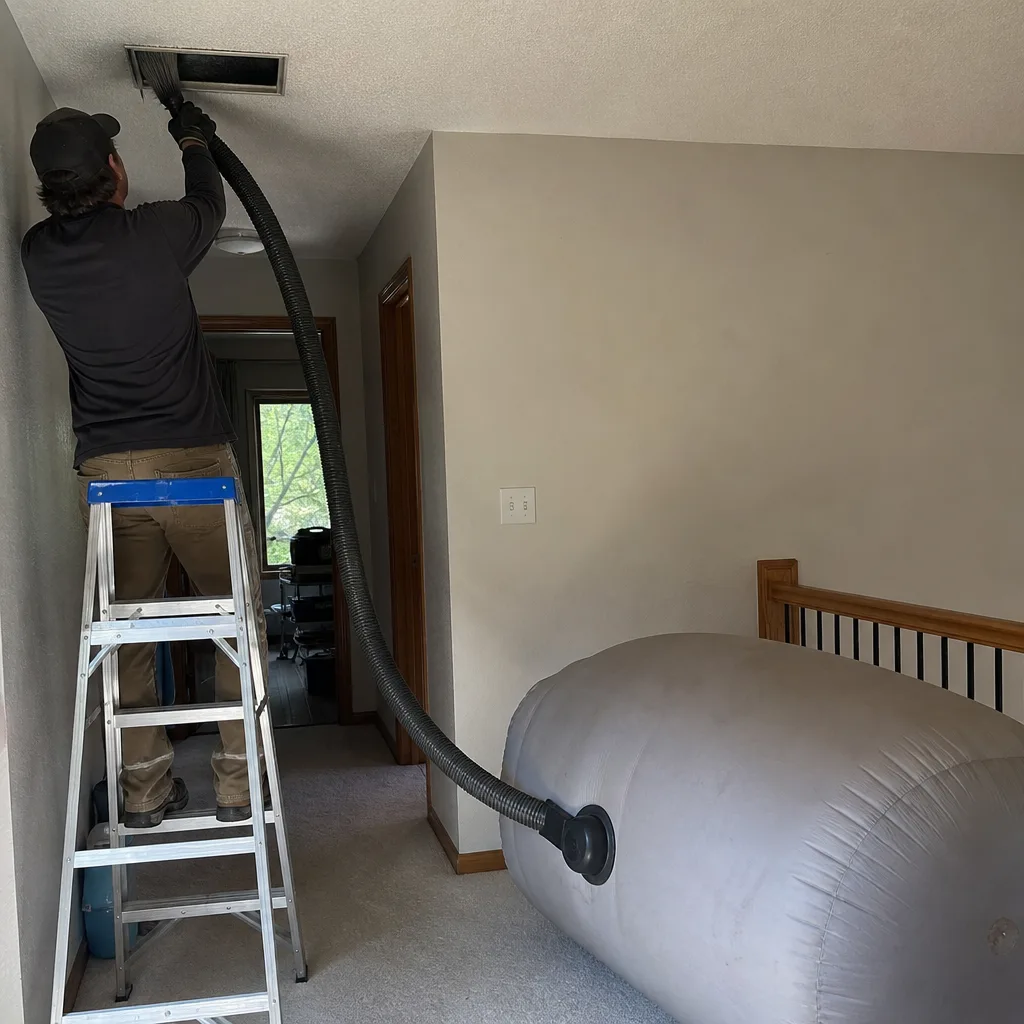
 Whole-home duct cleaning
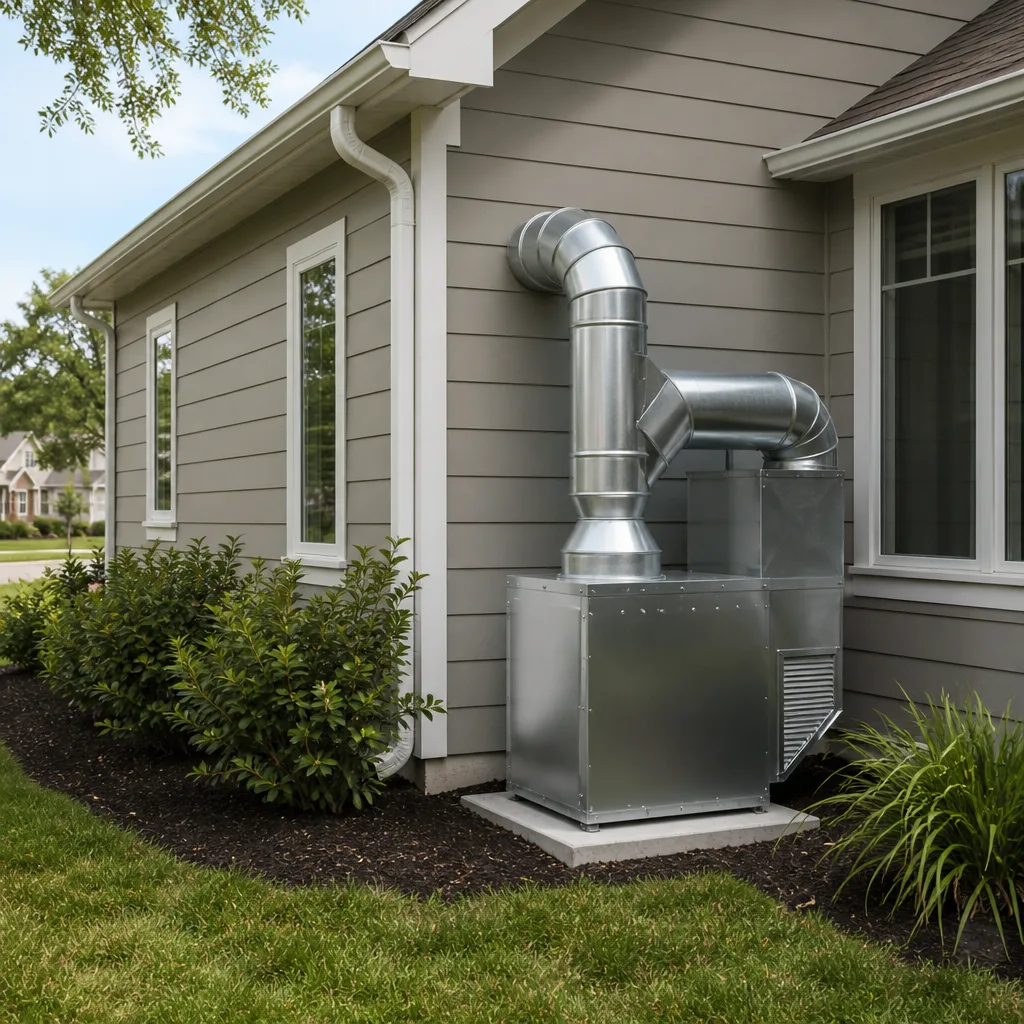
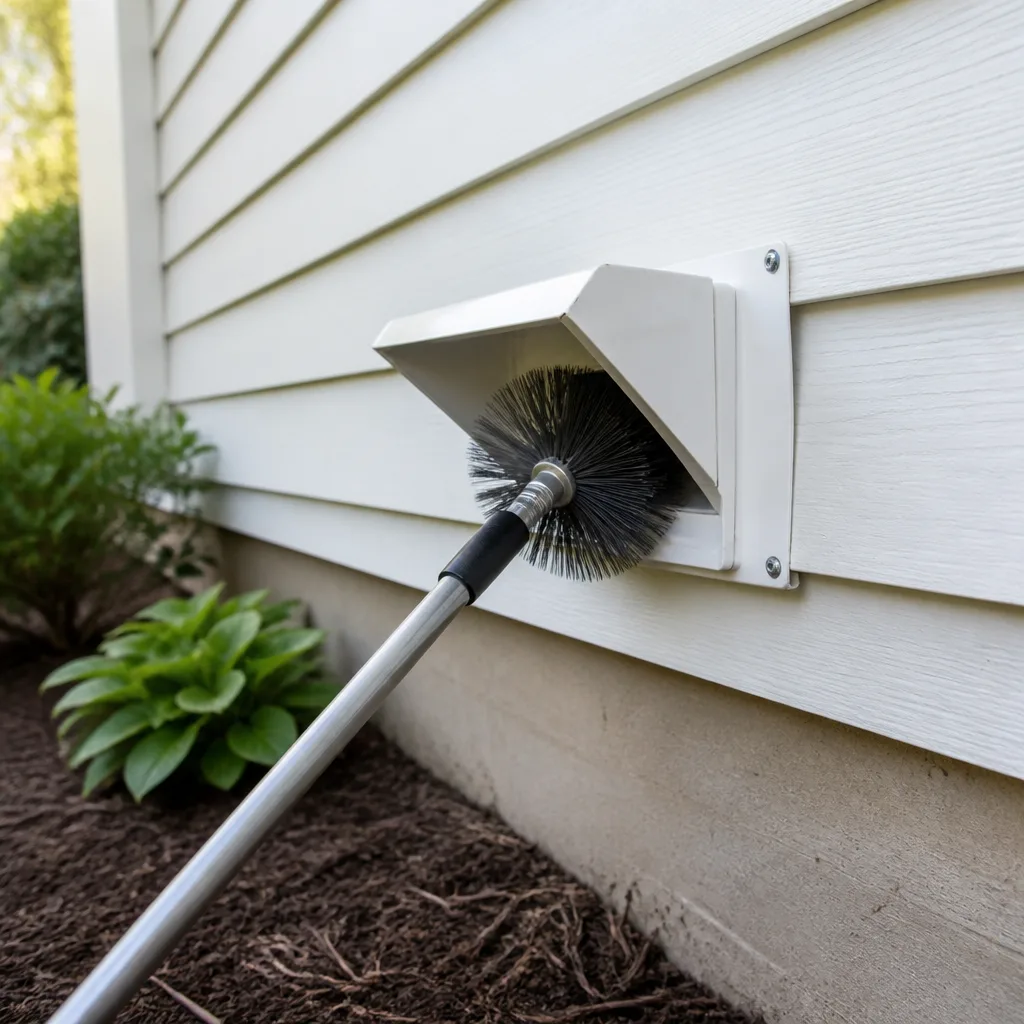 Dryer vent cleaning
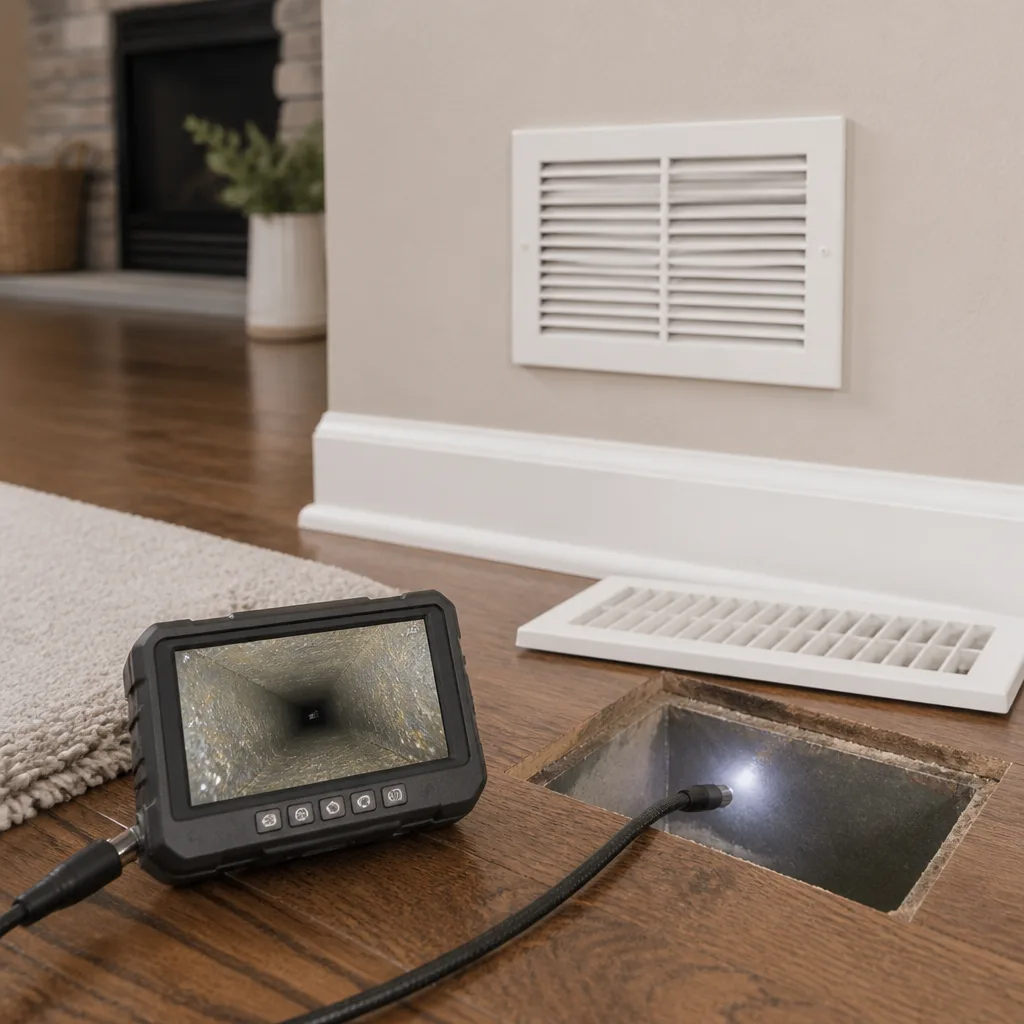 Camera inspection
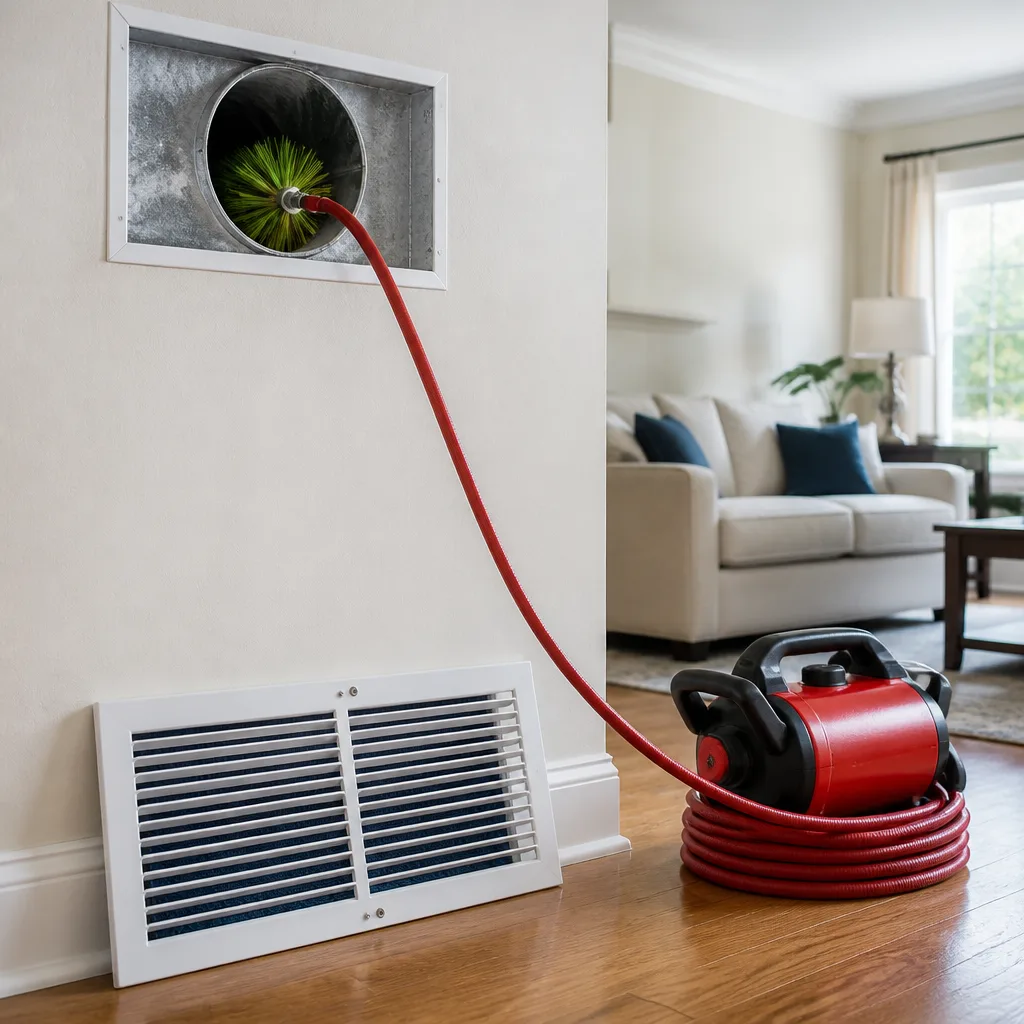 Sanitizing & deodorizing
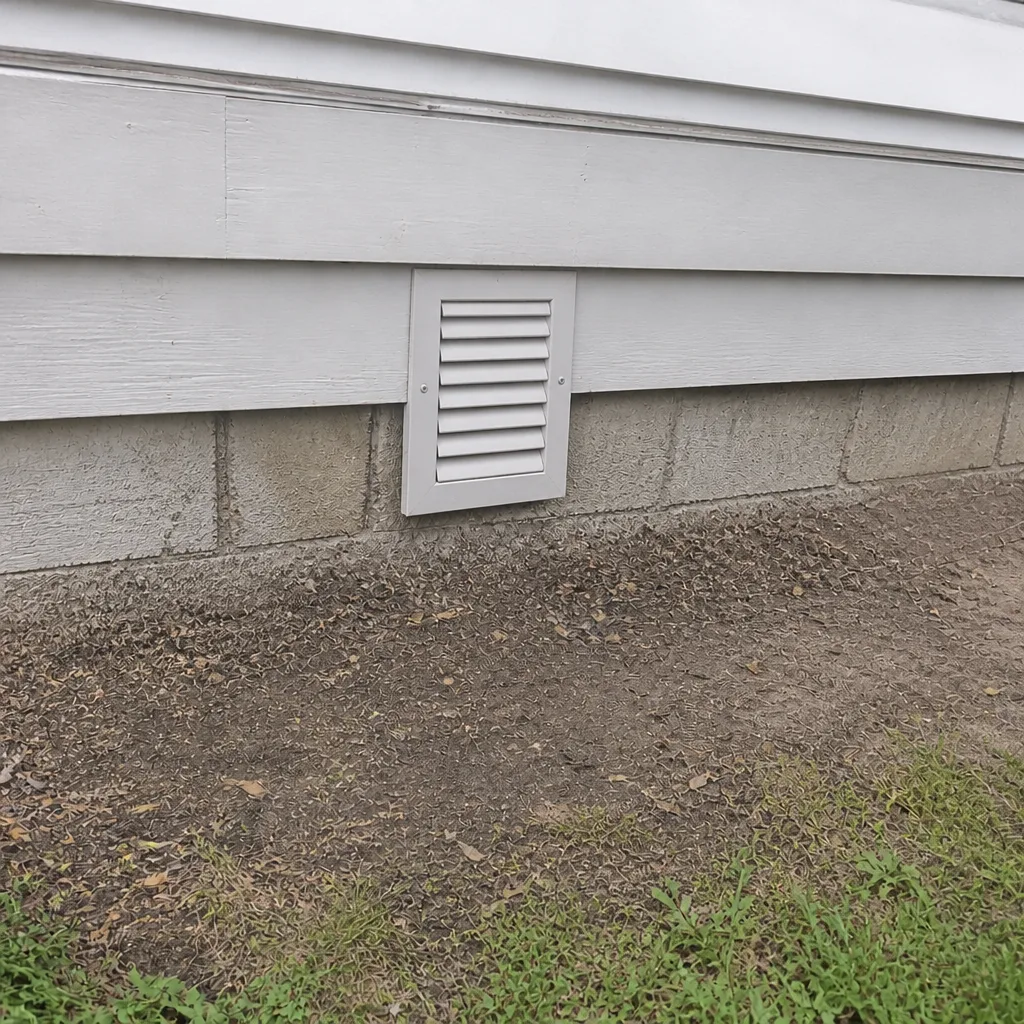
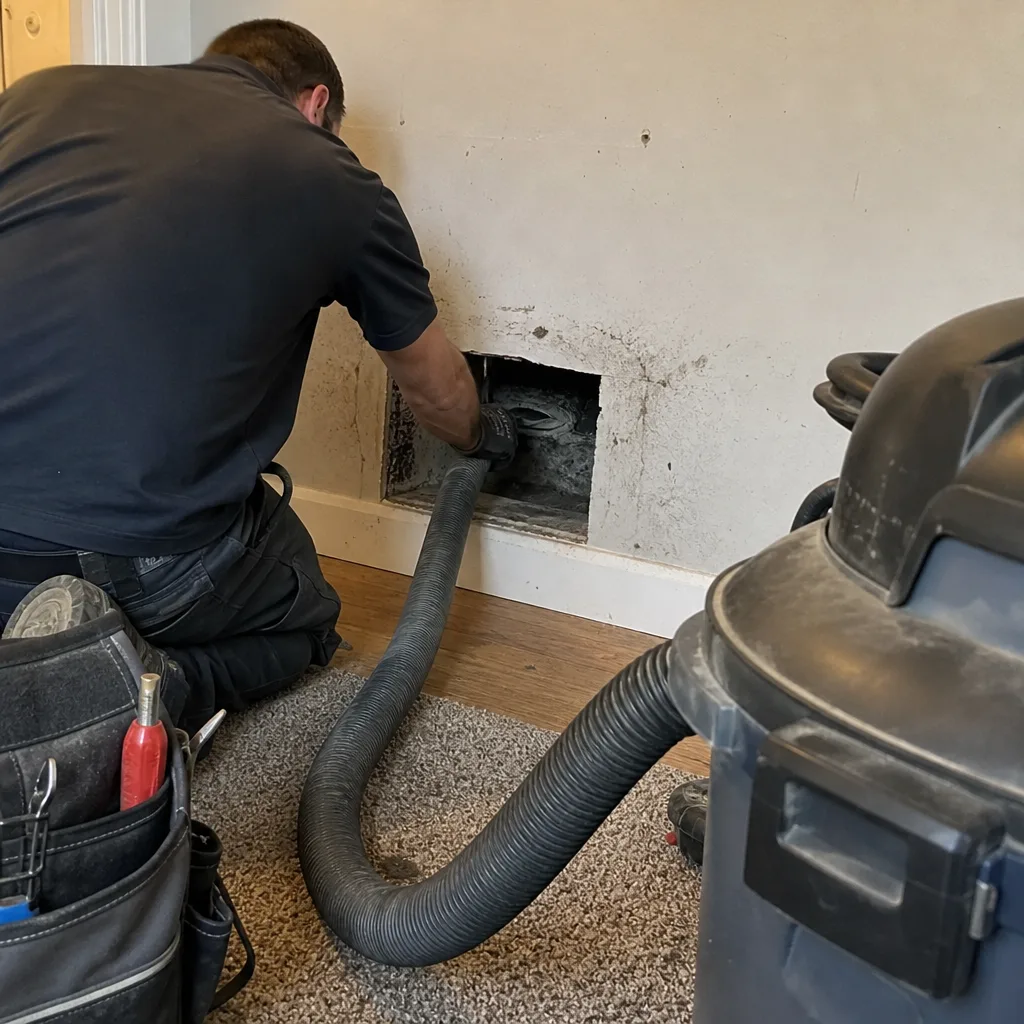
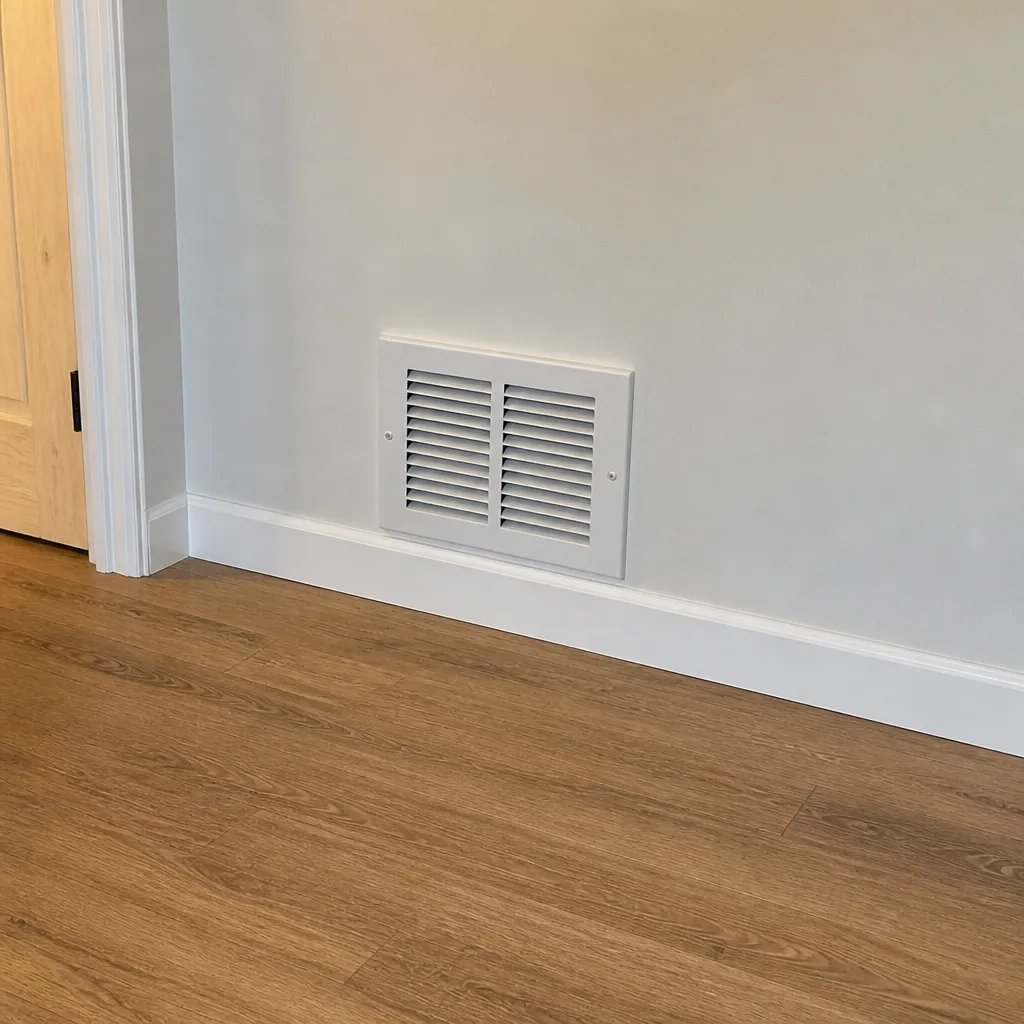
Whole-system duct and dryer vent check with before-and-after photos - you see exactly what came out of your vents
That "$99 whole-house special" is a bait ad - the real number appears once they are in your hallway, or the "clean" is a shop-vac at the register. We photograph the inside of your ducts before and after instead.
How to Hire an Air Duct Cleaning Contractor in Tacoma: A Step-by-Step Guide
A shop vac and a set of register brushes can be marketed as “professional duct cleaning” in Tacoma, and frequently is. The gap between a legitimate whole-system cleaning and a low coupon special isn’t subtle once you know what to look for: it’s the difference between a Nikro negative air machine pulling a sealed system into vacuum and a household vacuum pushed around your vents. Washington has no state license specific to duct work, so nobody is checking equipment or technique on your behalf. That leaves the hiring decision to you, and this guide gives you the five verifiable questions, the written scope, the price floor and the post-job documentation that separate a real specialist from a van with a hose. We’ll show you how to check it all in under ten minutes, from a Tacoma homeowner’s point of view.
Quick Answer
To hire an air duct cleaning contractor in Tacoma, verify five things before booking: the brand of equipment they use (Rotobrush, Nikro and Abatement Technologies are professional-tier; “a vacuum” is not), current NADCA membership, a written scope of work covering supply lines, return lines and the air handler cabinet, a whole-system price that reflects real labor, and a promise of trunk-level before-and-after photos. Ask each question directly by phone. A contractor who can answer all five without hesitation is worth a site visit. One who can’t isn’t.
Styles & brands we work with
- Whole-home duct cleaning
- Dryer vent cleaning
- Camera inspection
- Sanitizing & deodorizing
Table of Contents
- Why Washington’s Missing Duct License Changes Everything
- The Five Questions to Ask Before You Book
- What Professional Equipment Sounds Like on the Phone
- What NADCA Membership Means (and What It Doesn’t)
- Getting a Written Scope of Work Before Any Work Starts
- The Price Floor: What a Real Whole-System Cleaning Can’t Be Done For
- Post-Job Documentation You Should Insist On
- Tacoma’s Climate, Older Housing and Duct Problems That Hide
Why Washington’s Missing Duct License Changes Everything
Washington State does not issue a license specific to air duct cleaning. There is no state exam for duct work, no dedicated certification, no inspection regime attached to the trade. That single fact reshapes how you should hire. In licensed trades like electrical or plumbing, the state has already set a floor. In duct cleaning, you are the floor.
What this means in practice for Tacoma homeowners is that anyone with a business license and a van can advertise duct cleaning. The market fills with operators who bought a starter kit and a Groupon account. It also fills with genuine specialists who invested in truck-mounted and negative-air equipment. Both types use similar marketing language. Only one type can answer detailed questions about how the work is actually done.
The good news is that duct cleaning attracts legitimate contractors too, and they’re not hard to find once you know the filter. The bad news is that the cheapest quotes almost always come from the operators with the least equipment. Price and equipment correlate tightly in this trade because professional-grade machines cost real money, and a contractor who owns them has to charge enough to stay in business.
One more Tacoma-specific wrinkle: the region’s older housing stock (a lot of it built between 1900 and 1960) has ductwork that’s been retrofitted into spaces never designed for it. Attic runs in 1940s bungalows around North End and Proctor, undersized returns in mid-century homes near Lincoln, flex duct added to original sheet-metal systems in South Tacoma. A contractor who understands these patterns can tell you what to expect before they arrive. A generic van-and-vacuum outfit can’t.
If you want a baseline on what the service actually involves before hiring anyone, our guide to air duct cleaning covers the standard whole-system process in detail. Read that first, then come back here for the vetting checklist.
The Five Questions to Ask Before You Book
This is the core of the guide. Ask each of these questions by phone before you schedule. Keep the answers in writing if you can. A legitimate contractor will answer quickly. Anyone who dodges, gets vague or pivots to a pitch is telling you something.
- “What equipment do you use, and by brand?” You’re listening for Rotobrush, Nikro, Abatement Technologies or another professional name. If the answer is “a commercial vacuum” or “our proprietary system,” end the call.
- “Are you a current NADCA member?” NADCA is the National Air Duct Cleaners Association. It runs a certification exam (ASCS) and publishes a code of ethics for duct cleaning. Membership isn’t mandatory and doesn’t guarantee quality, but it’s a thirty-second check.
- “What exactly is included in the scope of work?” You want to hear supply lines, return lines and the air handler cabinet. If they only clean supply registers, they’re not cleaning the system.
- “Will you provide before-and-after photos at the trunk, not just the registers?” Register-level photos are meaningless because registers are what the homeowner sees. Trunk-level photos show you what was actually cleaned.
- “What’s the price for my whole system, and is it flat or per vent?” Per-vent pricing punishes larger houses and rewards cutting corners. Flat pricing structured around the actual system is the honest answer.
Five questions. Ten minutes on the phone. Most of the bad operators self-select out by question two. The ones who answer all five cleanly are worth scheduling. If a contractor passes the phone screen and you want to layer duct cleaning with HVAC cleaning, ask about that in the same call, because a contractor who can handle both in one visit is saving you time and money.
What Professional Equipment Sounds Like on the Phone
The single most reliable tell between a real contractor and a pretender is whether they can name and explain their gear. Not just name it, but explain why they chose it. A specialist talks about negative air pressure and putting the system under vacuum while agitating with a rotary brush. A pretender talks about suction and hoses.
Professional duct cleaning rests on two principles: agitation and vacuum. You scrub the duct walls to loosen the debris, and you keep the whole system under negative pressure so the loosened material is captured rather than blown into living space. The equipment to do this properly is specific:
- Rotobrush: A rotary brush system that pushes a spinning brush head through the ductwork via a flexible whip. It agitates the walls to loosen debris, then vacuums it back. Compact, effective for residential runs.
- Nikro: A negative-air machine – a large HEPA-filtered vacuum that pulls the entire duct system into negative pressure for the duration of the job. This is the machine that prevents cross-contamination into your living room.
- Abatement Technologies: Air filtration equipment borrowed from the remediation world. When you’re cleaning something that may contain mold spores or substantial organic debris, you contain it before you start.
Equipment like this costs thousands per unit. A contractor who owns and operates it has made a real investment, and they charge enough to keep it running. A contractor with a household canister vac has made no such investment, and the price they quote reflects that. Both prices land on your invoice, but only one of them delivers a clean system.
We use Rotobrush and Nikro as our baseline equipment, and we run Abatement Technologies filtration when containment matters. We mention this not as a pitch but as the standard you should be asking about when you call any Tacoma contractor. Our technicians have up to 9 years of experience with these tools – plenty to know the difference between a clean job and a rushed one.
One equipment-adjacent question worth asking: “Do you clean the air handler cabinet?” The cabinet is the metal box that holds the blower and often the filter and coil. Dust settles there too. A contractor with the right access tools will clean it. A contractor without them will say “we don’t go inside.”
What NADCA Membership Means (and What It Doesn’t)
NADCA – the National Air Duct Cleaners Association – is the industry body for duct cleaning in the United States. It publishes a standard (ACR, the Assessment, Cleaning and Restoration standard), runs a certification exam called the ASCS (Air Systems Cleaning Specialist), and requires members to follow a code of ethics. That’s useful context.
What NADCA membership does not do is verify that any specific job was done well. Membership is a company-level credential. It tells you the company has agreed to certain standards and, for certified members, that at least one person on staff has passed the ASCS exam. It doesn’t tell you who’s showing up at your door.
Verification takes about thirty seconds:
- Ask the company for their NADCA member number or check the member directory on nadca.com.
- Ask whether the person performing the work holds ASCS certification.
- Ask if the company can share their ACR standards training.
A current member will have all of this ready. A former member will have let it lapse, or will have never been a member and used loose language to imply it. Both are fair to press on.
In a state like Washington with no duct-specific licensing, a current NADCA membership is one of the few external validators you have. It’s not sufficient. It’s necessary. Pair it with the equipment question and the scope question and you’re already ahead of most homeowners looking for duct cleaning in Tacoma.
Getting a Written Scope of Work Before Any Work Starts
A written scope of work is a one-page document that says what’s included, what’s excluded, and what you’ll pay. It should arrive before the crew does, ideally by email along with the estimate. If your contractor can’t produce one, that is your answer.
The scope should explicitly cover:
- Supply lines: Every supply duct from the air handler to the register boot. How many runs, cleaned how, agitation method.
- Return lines: Every return from the register to the air handler. In many Tacoma homes this is a single central return, sometimes two.
- Air handler cabinet: Interior of the cabinet – blower compartment, filter housing, accessible coil surfaces. Not the coil itself unless specified.
- Registers and grilles: Removal, cleaning and reinstatement. Some contractors charge separately for this. It should be included.
- Exclusions: What’s not being cleaned and why. Coils requiring disassembly, ductwork in inaccessible chases, sections behind finished walls. These should be named, not silently skipped.
The exclusions matter as much as the inclusions. In older Tacoma homes, particularly around the North End and Proctor districts, it’s common to find ductwork that turns inside a finished wall or disappears into a wall cavity that was never designed for a brush. A contractor who tells you “we can’t reach this section and here’s why” is more trustworthy than one who promises everything.
Ask for the scope in writing and read it before you sign. Then ask one more question: “If you find something during the cleaning – say, a disconnected flex run or a crushed section – what happens?” A contractor who can seal and repair as part of the visit will tell you so. A contractor who only cleans will say “we’ll let you know.” Both answers are valid, but only one leaves you with a sealed system.
We carry Duct Repair & Sealing as a service precisely because cleaning reveals problems that nobody can fix from inside the machine. Clean ducts are only as good as sealed ducts, and if your return has a five-inch gap near the air handler, no amount of agitation is going to fix the air quality issue you called about.
The Price Floor: What a Real Whole-System Cleaning Can’t Be Done For
Somewhere below the market price for a legitimate job, there’s a number that should make you hang up the phone. A whole-system cleaning of an average Tacoma home takes a crew of two the better part of a day when done properly. Equipment, labor, travel and insurance all cost money. Any quote that ignores those inputs is a quote that ignores the work.
Here’s what actually drives the price on a real job:
- Number of runs: A 1,200-square-foot Tacoma bungalow with 8 supplies and 1 return is a different job from a 2,800-square-foot mid-century in Fircrest with 16 supplies and 3 returns.
- Access: Ductwork in a crawlspace or accessible attic is one thing. Ductwork buried in a 1940s plaster ceiling is another.
- Condition: A system that’s been cleaned before takes less time than one that hasn’t been touched since the house was built.
- Add-ons: Sanitizing, duct sealing, dryer vent cleaning or filter installation change the scope and price accordingly.
You don’t need a specific number to make the decision – anyone quoting a figure without seeing the system is guessing. What you need is a sense of proportion. A whole-system price should be a meaningful fraction of a day’s labor. If a quote looks like the cost of a pizza, the contractor is not going to spend the day on your system.
Ask directly: “Is this price for the whole system or just the accessible runs?” and “Is this a fixed price or will it change once you’re here?” A written estimate that says “price per job, agreed before work starts” is the honest answer. A price that starts low and grows once the van’s in the driveway is the industry’s worst pattern, and you have every right to press on it.
Our estimates are free, and the price is set per job by the written estimate. Nothing gets added once we’re on site, because the scope defines the whole job up front.
Post-Job Documentation You Should Insist On
You should be able to prove the job was done. That’s not an unreasonable ask. It’s a professional standard in every other trade, and duct cleaning should hold to it too.
Ask for the following, in writing, after the job:
- Before-and-after photos at trunk level. Not just at registers. The trunk line is where the volume of debris actually accumulates, and a photo there shows the difference. If the contractor only shoots photos of registers, they’re photographing what they can reach with a phone, not what they cleaned with a brush.
- A written summary of findings. Disconnected runs, crushed sections, pest evidence, mold-suspect areas, damaged seals, areas they couldn’t reach. This is your record for future maintenance decisions.
- Equipment confirmation. A brief note in the report saying which machines were used on your system. This sounds like overkill; it isn’t. It’s your evidence if anything gets questioned later.
- Photographs of the air handler cabinet interior. Before and after, at least one shot of the blower compartment. This is where the filter lives and where dust accumulates fastest.
The photos and summary are as valuable to you as the cleaning itself. If you’re planning future repairs – and most Tacoma homes over thirty years old have at least one – the documentation becomes a record you can hand to the next contractor or use to schedule a follow-up with dryer vent cleaning and HVAC work at the same time.
If a contractor doesn’t provide post-job photos by default, ask before you book. If they say “we don’t do that,” pick a different contractor.
Tacoma’s Climate, Older Housing and Duct Problems That Hide
Tacoma’s wet, mild climate hides duct problems behind a specific kind of comfort. Because our outdoor humidity is high and outside temperatures are moderate, indoor air quality issues don’t always announce themselves the way they do in Phoenix or Chicago.
What that looks like in practice: ductwork that has never dried out fully has more opportunity for biological growth. Flex duct runs in crawlspaces pick up moisture from the ground and grow musty odors. Similarly, systems in older homes often have return leaks that pull air from crawlspaces or attics, mixing outdoor air and potential contaminants into the supply.
Housing patterns shape what we see in different parts of Tacoma:
- North End and Proctor: Pre-war homes with retrofitted systems. Plaster ceilings, small chases, limited access. Duct runs often disconnect quietly behind finished walls.
- Lincoln and Hilltop: Mid-century construction with original sheet metal. Leaks are common at joints and seams where tape has failed.
- South Tacoma and Lakewood: Post-war tract homes with crawlspace systems. Flex duct prevails, and flex duct fails sooner than rigid.
- Fircrest and University Place: Larger homes with more complex systems. Return sizing issues turn up more often here.
None of this is unique to Tacoma. What’s specific is the combination of older housing, wet winters and moderate summers. Systems that face 20-degree winters have problems you can feel. Systems that live in the Pacific Northwest’s long wet season have problems you smell.
If the smell is coming from your laundry room, our dryer vent cleaning page covers why clogged dryer vents behave differently in this climate. It’s a fire-safety issue and most duct companies skip it or outsource it. Getting it cleared during the same visit as your duct cleaning is the sensible schedule.
For the Tacoma picture more broadly – what whole-system cleaning covers, how we approach it, and the equipment behind it – our Tacoma Air Duct Cleaning Co main page lays out the full service catalog. If you’re a property manager juggling several buildings, start there.
Common Mistakes to Avoid
- Booking the cheapest coupon on the door. A door-hanger price is designed to get a technician to your driveway. What happens after that is where the surprise invoice lives. Ask what the price is for the whole system before scheduling.
- Assuming a carpet cleaning company also does ducts. Many do, with the same vacuum and no negative-air equipment. Confirm the specific machines before booking.
- Letting a technician clean only the registers. Registers are what you see. Trunks and returns are what matters. Confirm the scope in writing or it may not happen.
- Skipping the air handler cabinet. The cabinet is where the filter lives and where dust accumulates fastest. A contractor who skips it has done part of the job.
- Believing “sanitizing” fixes a dirty system. Sanitizing after cleaning makes sense. Sanitizing in place of cleaning is a marketing shortcut. The order matters.
- Ignoring disconnected or crushed ductwork. Cleaning a system with leaks is like mopping a floor with the window open. If the contractor can’t repair or seal, plan for a second visit.
- Not asking for photos at the trunk. Without trunk-level before-and-after photos, you have no way to confirm anything beyond the register was touched.
- Assuming NADCA membership without checking. Ask for the member number. Thirty seconds of verification saves you hours of regret.
See the difference
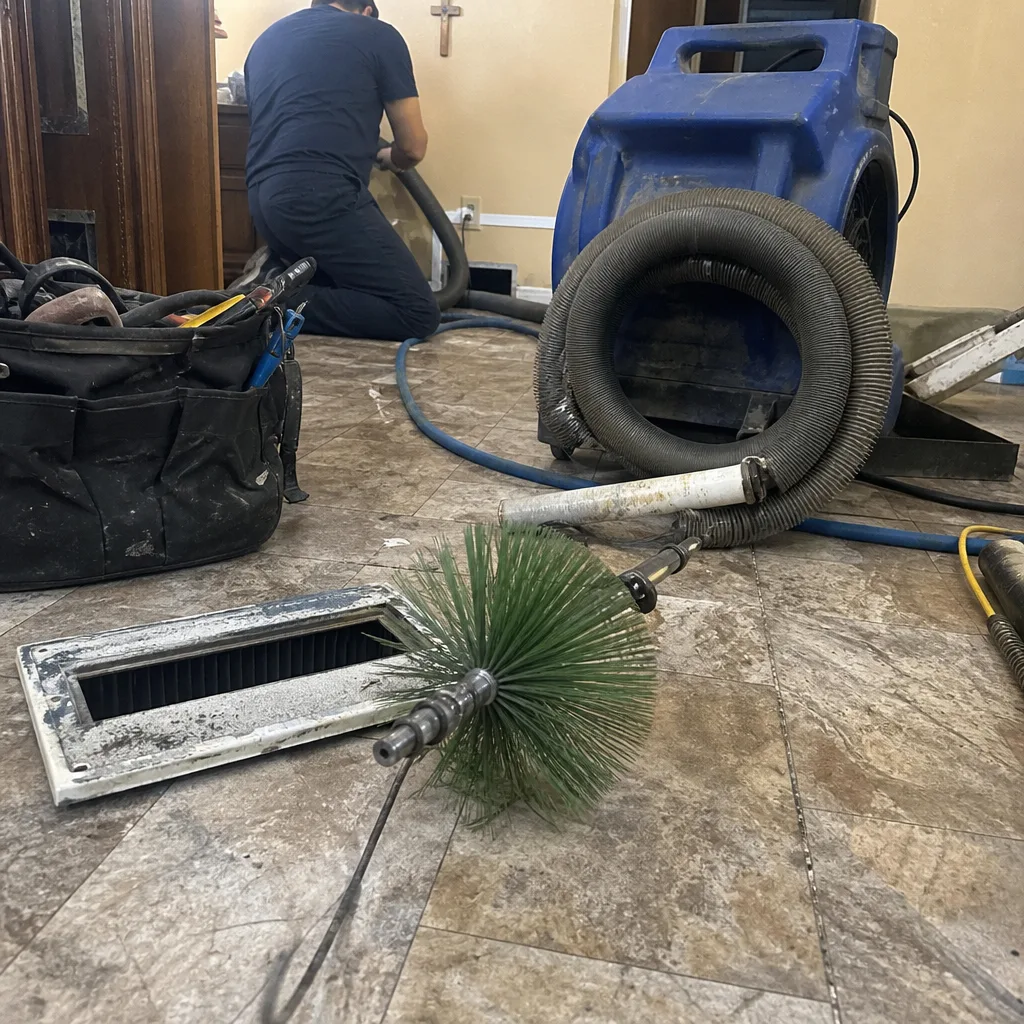 Before
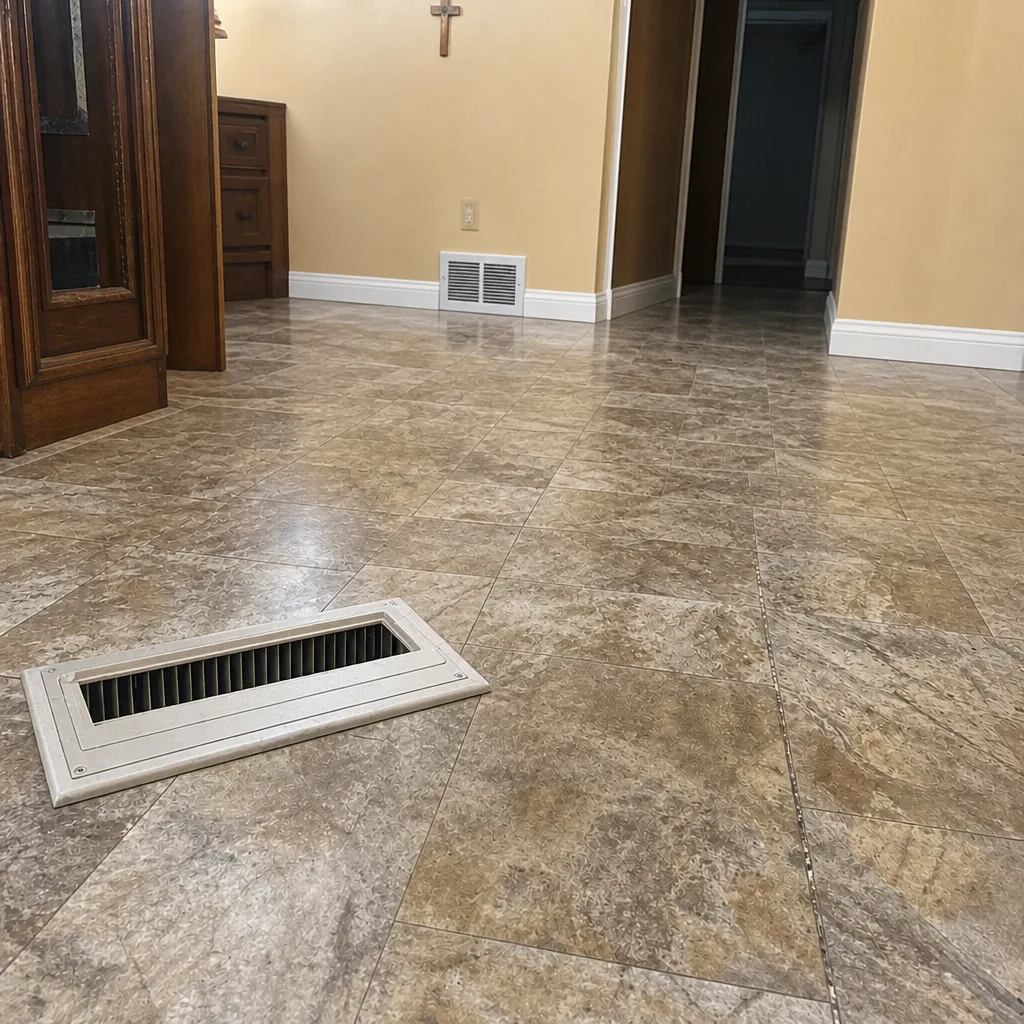 After
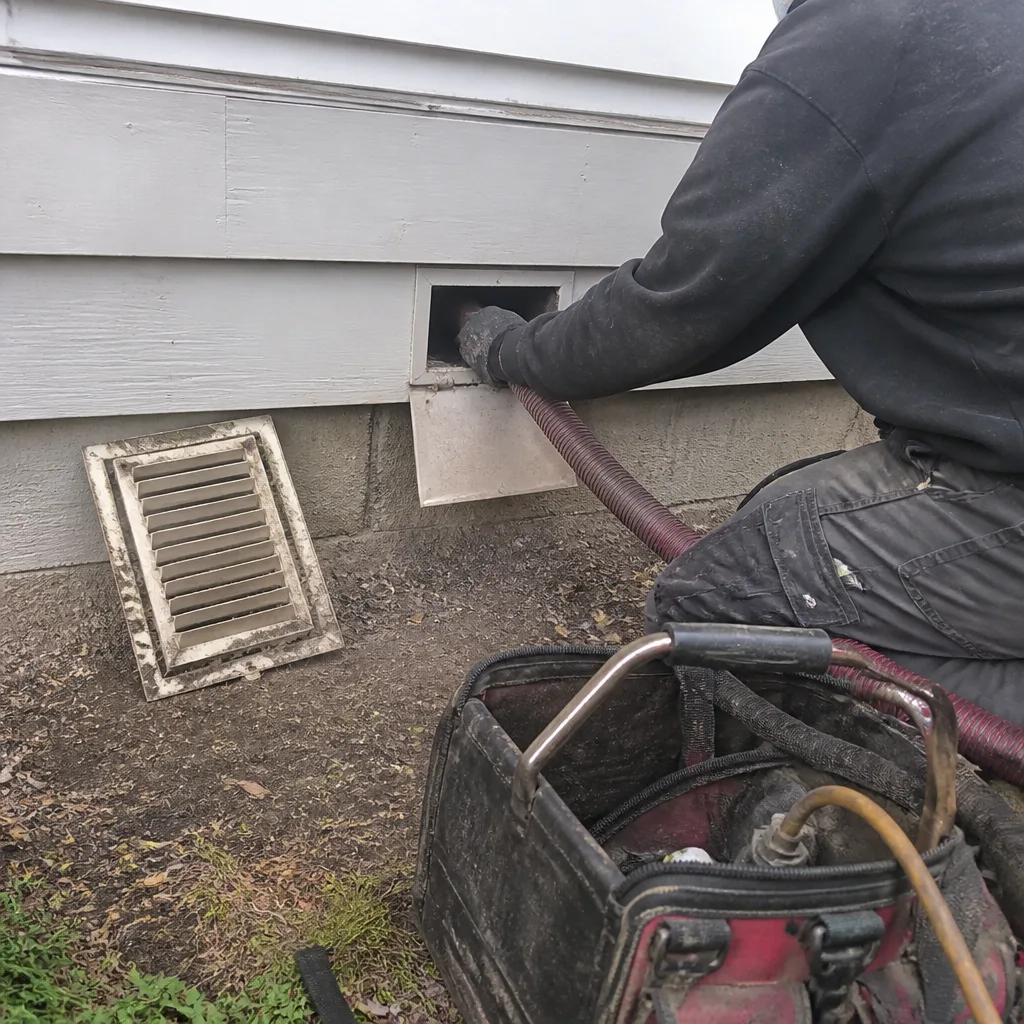 Before
 After
 Before
 After
When to Call a Professional
Some duct problems are obvious – visible debris blowing from a register, musty odor through the entire house, uneven airflow between rooms. Others are quieter. A system that hasn’t been cleaned in years has likely accumulated enough debris to matter even if nothing feels wrong yet. Similarly, if your HVAC equipment was installed without duct cleaning, or if your technician just replaced a blower and noted significant dust inside the cabinet, that’s a signal to schedule a whole-system cleaning.
In our experience, the two most common Tacoma triggers are musty odors coming from a specific room’s register (often the room over the crawlspace) and a spike in allergy symptoms noticed after the heating season starts. Both point toward duct-level cleaning rather than filter changes.
If you’re hear for the equipment-driven specialist discussion and want an exact scope, Tacoma Air Duct Cleaning Co offers free estimates in Tacoma – call (877) 792-6024. We answer 24/7. Fast dispatch from 7am to 7pm, Sunday through Friday. Our estimates are free, and the price is set per job by the written estimate.
Frequently Asked Questions
Air duct cleaning in Tacoma is priced per job, not per vent. A typical whole-system cleaning for an average Tacoma home falls in a moderate range that reflects a full day of crew time with professional equipment – anything far below that number is a sign the scope or equipment has been cut. The written estimate sets the final price, agreed before work starts. Call (877) 792-6024 – our estimates are free.
Cheaper quotes usually come from contractors who don’t own professional equipment, which means the actual cleaning is a shop vac run over the registers rather than a whole-system agitation and negative-air pass. The equipment difference (Rotobrush, Nikro, Abatement Technologies vs. a household vacuum) is precisely what’s being priced. A contractor who quotes far below the market is not doing more with less; they’re doing less. Call (877) 792-6024 if you want a price with the equipment named.
Ask for before-and-after photos taken at the trunk level, not just at the registers, plus a written summary of findings, and confirmation of which machines were used. Registers are easy to photograph; trunks are what show the real cleaning. A legitimate contractor documents the job as standard practice. If they can’t, don’t hire them – call (877) 792-6024 if you want a scope that specifies exactly these deliverables.
Most homes in Tacoma do well on a five-to-seven-year cycle, with adjustments for pets, recent renovation, and whether anyone in the household has respiratory sensitivities. Homes on a busy street, or with a system that pulls outdoor air through a leaky return in the crawlspace, tend to need it more often. It’s not a yearly job for most Tacoma houses, despite what some marketing suggests. Call (877) 792-6024 for a scope estimate fitted to your actual system.
No. Washington State does not issue a license specific to air duct cleaning, and there is no state exam or inspection regime attached to the trade. That means the hiring decision is entirely on you, which is why the five-question checklist in this guide matters so much. NADCA membership is the closest external validator you can check quickly.
Whole-system cleaning should include the air handler cabinet interior – blower compartment, filter housing, accessible coil surfaces – as a standard part of the scope, not an add-on. The dryer vent is usually a separate service; we list it as standalone because the fire-safety risk is real and most duct companies skip or outsource it. Ask both questions when you book. Call (877) 792-6024 to confirm what’s covered in your estimate.
The Bottom Line
Washington’s missing duct-cleaning license means the vetting is entirely on you, and the five-question screen is where it lives: equipment brands (Rotobrush, Nikro, Abatement Technologies), current NADCA membership, a written scope covering supply, return and air handler, a whole-system price that reflects real labor, and trunk-level before-and-after documentation. In our experience, most van-and-vacuum operations fall out by question two. The ones who pass are worth booking. If you want a scope on paper before you commit, our estimates are free, the price is set per job by the written estimate, and we’ll put the equipment names in the estimate itself.
Call (877) 792-6024 for a free estimate on air duct cleaning in Tacoma. We answer 24/7. Fast dispatch from 7am to 7pm, Sunday through Friday. If you’d like to see what’s covered first, our Tacoma Air Duct Cleaning Co team is glad to walk through it before you commit to anything.
Written by the team at Tacoma Air Duct Cleaning Co.