
Nikro Air Duct Cleaning in Tacoma: A Homeowner’s Guide
Most homeowners hear the name Nikro for the first time when a technician rolls a stainless-steel box into the mechanical room and starts connecting hoses. Nikro makes HEPA-filtered negative air machines built for source removal in HVAC systems, and the difference between one of those and a rented wet-dry vac is the difference between extracting debris and stirring it into your living room air. Here’s what the equipment actually does, and what to look for during a Nikro-based cleaning in Tacoma.
What Is a Nikro Negative Air Machine, Exactly?
A Nikro negative air machine is a HEPA-filtered collection unit that pulls the entire duct system into negative pressure while a rotary brush loosens debris inside. It’s a sealed vacuum chamber with a filtration stack, not a shop vacuum with a longer hose.
Here’s how it works in plain terms. The machine connects to a trunk line or plenum through a flexible collar, creating a pressure differential across the whole system. That differential is measured in CFM (cubic feet per minute), and it’s the number that decides whether the job works. If the machine can’t pull enough air volume to overcome the resistance of the duct run, debris settles back into the branches instead of traveling to the canister. Nikro units are sized for residential and light-commercial systems specifically because they have to hold that differential through long trunk runs and tight turns.
The filtration stack is the other half of the job. Air pulled from your ducts passes through a pre-filter and then a HEPA stage before it exhausts back into the room. That matters in a Tacoma home where the ducts sit under a crawlspace and collect fine silica from old drywall work, insulation fibers, and whatever spores find a damp spot to settle in. Under negative pressure, all of that travels to the canister instead of puffing out of a supply register while the technician works.
- What the machine is: a HEPA-filtered negative air unit made for HVAC source removal
- What it measures: CFM differential across the duct system
- What it does: holds the system under vacuum so loosened debris has one direction to travel
- What it isn’t: a shop vac, a leaf blower, or a “whipper” run without collection
If you’d rather hand the work to someone who owns this equipment rather than renting it, call (877) 792-6024. We answer 24/7. Fast dispatch from 7am to 7pm, Sunday through Friday.
Why Tacoma Ducts Hold On to Debris Differently
Tacoma sits in the Puget Sound lowland, and the local climate does specific things to duct debris. Homes here run the furnace for months, then idle it through a damp spring, and the inside of the duct system swings between dry and humid right along with the weather.
That cycle matters because debris that stays dry stays loose. Debris that gets damp once and then dries out again tends to compact against the duct wall. We see this most in older homes around North End and Proctor, where galvanized trunk lines run through crawlspaces that stay cool and humid well into summer. The sediment actually adheres to the metal, sometimes in a mat that a light vacuum pass won’t touch.
That’s where rotary brush agitation earns its keep. A rotating brush head, driven through the branch runs, breaks the bond between compacted debris and duct wall, and the negative air machine carries it away. Doing the brush work without the collection unit running is a losing proposition in this climate: the loosened material resettles in the next branch over. Doing the collection without brushing leaves the compacted layer in place.
Newer construction in Tacoma has a different pattern. Flexible duct runs, tighter envelopes, and shorter distances to the air handler mean debris is less compacted but more concentrated near the plenum. The equipment setup is the same. The brush head and the level of agitation change based on what the technician finds inside.
What You’ll Actually See During a Nikro Cleaning in Tacoma
A proper Nikro-based cleaning is a visible process, and you should be able to follow what’s happening from your hallway. If you can’t see the equipment working, ask why.
- Collection unit placement. The machine sits near a primary trunk access point, usually in the mechanical room, garage, or crawlspace entry. A heavy flex hose runs from the unit to the duct connection.
- Access point work. The technician cuts small access holes in the trunk line where needed and seals them with approved covers afterward. Some homes have existing accesses; some don’t. Ask up front how many are going in and how they’ll be closed.
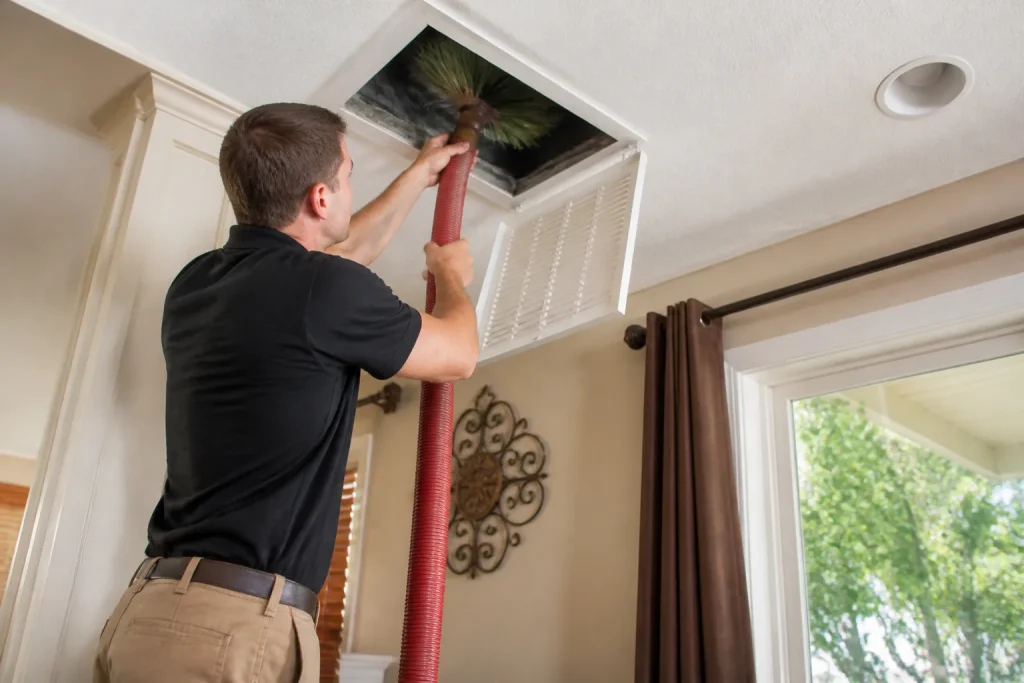
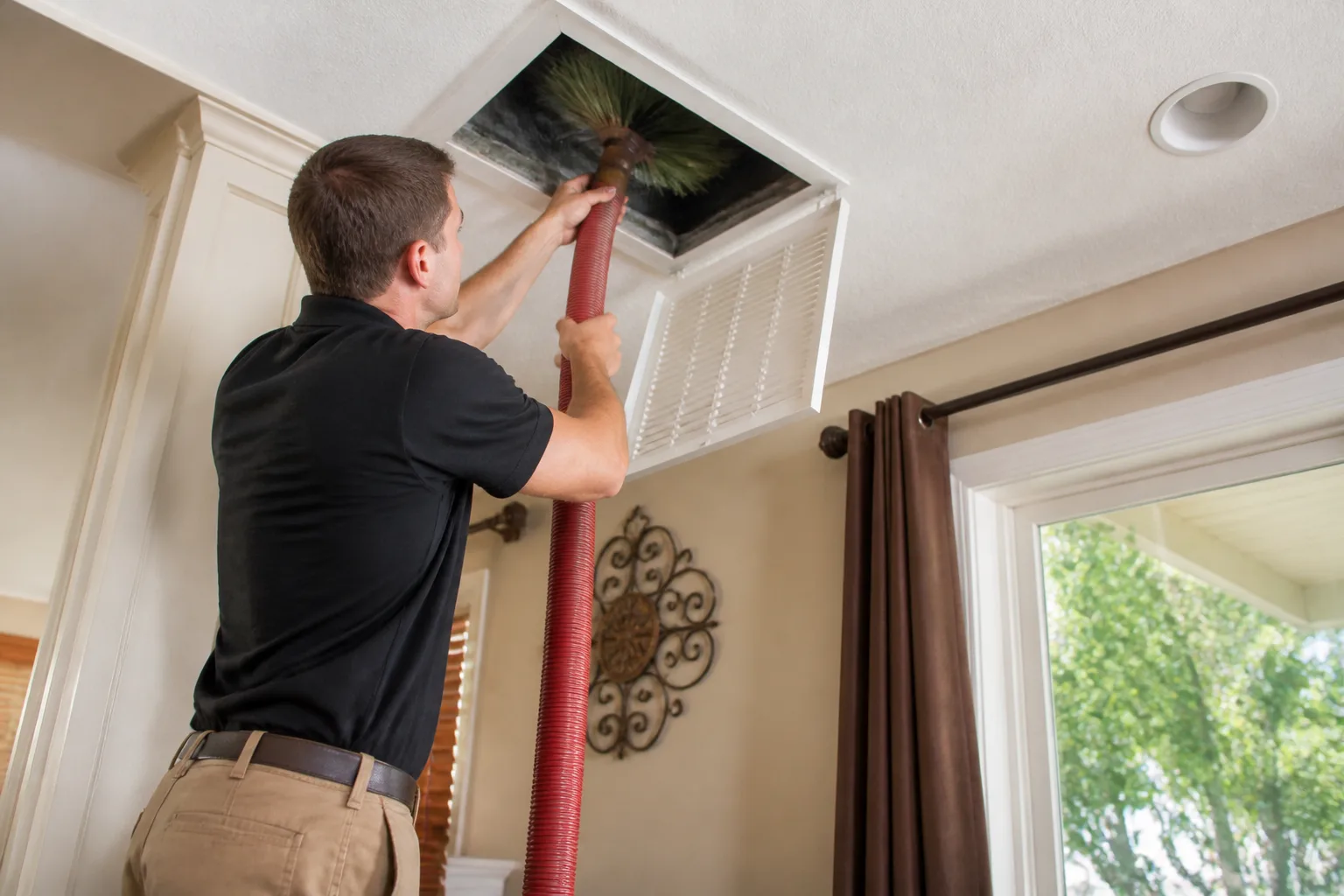
- Brush and air sweep. One technician feeds the rotary brush through each branch while the collection unit runs continuously. You’ll hear the brush motor pitch change as it moves through different diameter runs.
- The air handler as a separate zone. The cabinet and blower get their own collection connection. This is the zone most contractors skip, and it’s the one that holds the most debris in a typical Tacoma home.
- The canister reveal. When the job wraps, ask to see what came out. The collection canister tells you what your system was actually holding: drywall dust, pet hair, insulation fibers, or clumped material that suggests moisture has been getting in somewhere.
That last step is where a homeowner learns something useful. Fine, dry debris points to a well-sealed system that simply needed cleaning. Clumped or fibrous material with a smell points to a leak or a moisture problem that cleaning alone won’t solve, and that’s when we talk through air duct cleaning scope alongside duct sealing. Clean ducts are only as good as sealed ducts.
The HEPA Filter Question: Why It Matters More Than You Think
The filtration stage on a negative air machine determines whether extracted debris stays in the canister or comes back into your living space as fine particulate. A unit without HEPA filtration is essentially blowing the problem around.
That’s not an abstract concern in a house where a homeowner has been dealing with allergy symptoms. Once a rotary brush breaks compacted debris loose, the airborne load inside the duct system spikes. Without proper filtration on the exhaust side of the collection unit, those particles have to go somewhere. Some of them escape through the access points. Some of them push out through supply registers into bedrooms.
We use Abatement Technologies filtration equipment alongside Nikro units on jobs where contamination control matters, the same approach remediation professionals take to a containment zone. It’s a small addition to the setup that changes what a homeowner’s air looks like during the job rather than after it. The filters themselves get checked and changed as part of normal operation; a HEPA stage that’s loaded-up and neglected does less than a clean pre-filter. That’s one of the questions to raise with any contractor before the truck rolls.
Questions to Ask a Contractor Who Says They Use Nikro
Plenty of duct cleaners mention Nikro in a quote because the name carries weight. Fewer can answer a specific question about the unit they’ll actually bring to your Tacoma home. Ask these before you book.
- Which model? Nikro makes several negative air machines sized for different CFM ratings and duct volumes. A homeowner’s home should get a unit sized for the house, not for a condo.
- How often are the HEPA filters changed? The answer should be a protocol, not a shrug. A dirty filter is a false promise.
- How is the air handler handled? If the answer is “the trunk line covers it,” push back. The cabinet is a separate collection zone.
- Are access points cut and then properly sealed? The cut has to be closed, not just covered with tape.
- Does the company also do duct sealing? If a technician finds a leak, a contractor who doesn’t seal can only report the problem and leave.
In our experience, the contractors who know their equipment by model number are also the ones who walk the system before quoting it. That’s a reliable signal. So is asking what happens to a system where the brush finds moisture damage or physical collapse in a run, because the answer tells you whether HVAC cleaning and repair are within the company’s scope or outsourced somewhere else. For a homeowner ready to move past cleaning into filtration upgrades, Honeywell and Aprilaire products are what we integrate for whole-home air quality work. All five of our services (air duct cleaning, dryer vent cleaning, HVAC cleaning, duct repair and sealing, and air quality and sanitizing) sit under one company, so coordination stays with one team.
When to Call a Pro Instead of Peeking in the Vents
If you can see visible debris on the supply register, you’re looking at roughly the top of the pile. The rest of the system, especially the air handler cabinet and trunk lines, is the part you can’t reach with a flashlight.
Call a professional when you notice any of the following in a Tacoma home:
- Musty or dusty odor when the furnace or heat pump kicks on
- Uneven airflow between rooms, or rooms that never quite warm up
- Visible dust trails on ceilings or around supply registers
- Allergy symptoms that get worse indoors during heating season
- No service history on record for the duct system, or many years since the last cleaning
- A dryer that takes longer than it should to dry a load (that’s a separate vent issue, and worth a look)
For that last item, dryer vent cleaning handles the lint load that builds quietly until a dryer stops keeping up. It’s a fire-risk reduction step that most duct cleaners skip entirely, and we do it as a standalone service. Related services in Tacoma we cover under one roof: air duct cleaning, dryer vent cleaning, HVAC unit cleaning, duct repair and sealing, and air quality and sanitizing.
The Bottom Line
Nikro negative air machines earn their reputation because they solve the two problems that make duct cleaning fail: insufficient CFM to move debris, and no HEPA filtration to keep it out of the living space. Combined with rotary brush agitation and a proper connection to the air handler cabinet, they give a Tacoma homeowner a cleaning that holds up. If you’re comparing quotes, ask about equipment models, filter protocols, and whether the company can seal a leak if it finds one. If you’re in Tacoma and need help, Tacoma Air Duct Cleaning Co offers free estimates. Call (877) 792-6024. We answer 24/7. Fast dispatch from 7am to 7pm, Sunday through Friday. Our technicians have up to 9 years of experience with this equipment, and the local pro is licensed and insured as their state requires.
Frequently Asked Questions
Expect a typical range of roughly $350 to $600 for a full residential system, with whole-home air quality upgrades running higher depending on scope. The only figure that sets your final price is the written estimate, agreed before work starts, with one flat price per system. Call (877) 792-6024 for an exact quote – estimates are free.
Price gaps usually come down to equipment and scope. A low quote often reflects a shop vac and a single pass, or a “per vent” price that grows once the technician is on site. A Nikro-based job with rotary brush agitation, proper HEPA filtration, and separate air handler handling costs more because it involves more equipment and more time. One flat price per system, agreed before work starts, removes the surprise. Call (877) 792-6024 to talk through scope and see the equipment upfront.
Ask for before-and-after photos of your own ducts, and ask to see the debris canister at the end of the job. A sealed access point, a visible HEPA filtration stage, and a canister showing what came out are three concrete things to check. Call (877) 792-6024 if you’d like to see how we document the work.
Most Tacoma homes land somewhere between every three and five years, but a household with pets, recent remodeling, or a moisture problem in the crawlspace may need it sooner. If you can see debris on registers or notice odors when the heat comes on, that’s your answer right now. Call (877) 792-6024 for a free estimate and a straight read on what your system actually needs.
Written by the team at Tacoma Air Duct Cleaning Co.
Need Air Duct Cleaning Help?
Call Tacoma Air Duct Cleaning Co - the local pro we connect you with is licensed and insured, with free written estimates in Tacoma.
(877) 792-6024